There is a particular way of making things in Australia that does not announce itself. It turns up in a song recorded in a fibro shed in Ipswich, in a painting of a service-station awning outside Ballarat, in a photograph of a drained public pool in Whyalla. The materials are ordinary. The places are not the ones that appear on postcards. Yet the work carries a shared sensibility: an attention to heat, distance, and the weight of built things, and a suspicion of anything too polished. This article traces that common ground between Australian music and visual art, with a focus on regional and suburban practice rather than the metropolitan centres that usually claim the story.
The sensibility is not a style. It is closer to a set of conditions. Long drives between towns, cheap rent in industrial estates, the particular acoustics of a weatherboard room, the way light falls on bitumen at four in the afternoon. These conditions shape how a songwriter treats reverb and how a painter treats ochre. They also shape what gets made, and what gets left out.
The Shared Conditions of Regional and Suburban Practice
Most accounts of Australian culture start in the inner city. They begin with a venue in Fitzroy or a gallery in Redfern, then move outward as if the regions were a footnote. But the work that interests me usually starts somewhere else: a scout hall in Toowoomba, a share house in Geelong West, a studio above a takeaway shop in Port Pirie. In these places, creative practice is fitted around shift work, school pick-ups, and the long drive to the nearest decent hardware store.
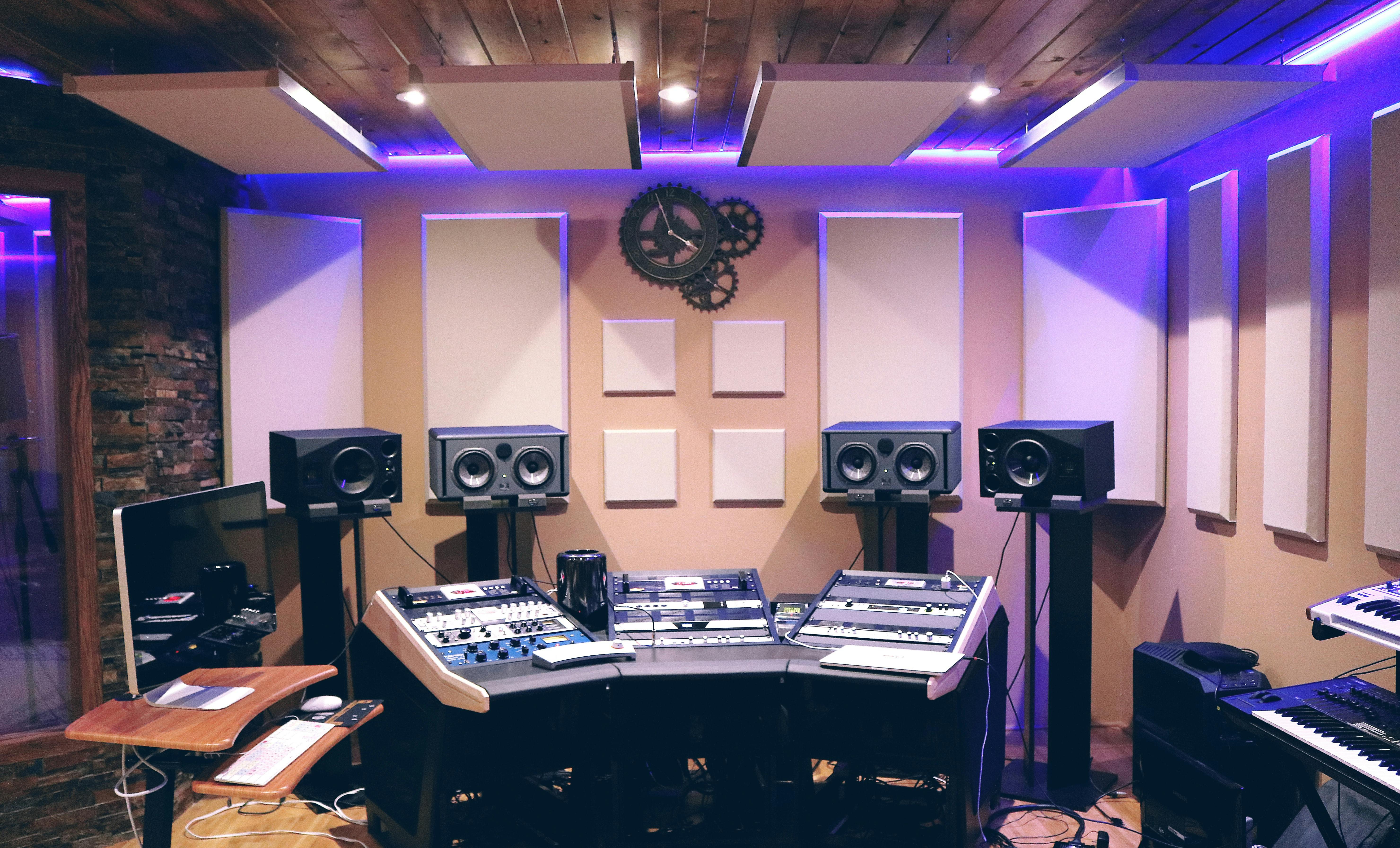
That constraint is not a limitation. It is a material. A musician recording in a suburban garage learns to work with the sound of a passing freight train. A painter working on a kitchen table learns to mix colours under a fluorescent light. The results are rarely sleek. They carry the texture of the room they were made in.
Distance as a Structural Force
Distance does more than separate regional artists from metropolitan audiences. It changes the rhythm of the work. There is no opening night to rush toward, no weekly residency to fill. A record can take two years. A series of paintings can sit against a wall for a season. The work is allowed to accumulate slowly, and that slowness becomes audible and visible.
You can hear it in the long decay of a guitar note on a record made in a tin shed. You can see it in the patient layering of paint in a landscape that refuses to resolve into a view. Neither the song nor the painting is in a hurry. Both assume the listener or viewer has time.
Materials That Resist Perfection
Australian regional and suburban practice has a particular relationship with materials. It is not the relationship of the well-stocked city studio, where every pigment and microphone is available by courier. It is a relationship of substitution and repair. A snare drum is dampened with a tea towel. A canvas is stretched over a frame made from salvaged pine. A synthesiser is patched with gaffer tape.
These choices are practical, but they become aesthetic. The tea towel changes the attack of the drum. The salvaged pine warps slightly, and the painting sits a little off the wall. The gaffer tape hums. The work carries the evidence of its making, and that evidence is part of what it says.
Parallel Histories: Music and Visual Art Outside the Centres
The common sensibility did not appear suddenly. It has a history, and that history runs through both music and visual art in parallel. In the 1970s and 1980s, regional art galleries and community radio stations gave space to work that did not fit the metropolitan template. A painter in Bendigo could show at the local gallery without first being validated in Melbourne. A band in Lismore could press a seven-inch and send it to a community station in Armidale.
These networks were small but durable. They created a set of expectations that differed from the city. A regional audience did not ask whether a work was fashionable. It asked whether the work was true to the place it came from. That question still shapes the sensibility.
The Influence of Landscape on Sound and Image
Australian landscape is often treated as a subject: a thing to be painted or sung about. But in the work I am describing, landscape is closer to a method. The flatness of the Hay Plain becomes a way of structuring a song, with long held notes and little harmonic movement. The glare of a summer afternoon becomes a way of handling light in a photograph, with blown highlights and deep shadow.
This is not landscape as scenery. It is landscape as a set of instructions. The artist learns from the place how to make the work. A songwriter from the Mallee does not need to write lyrics about wheat silos. The silos are already in the spacing of the verses.
Institutional Structures and Their Gaps
Institutions shape creative output, often by their absence. A regional town may have a gallery but no recording studio. It may have a TAFE printmaking workshop but no live music venue. Artists work around these gaps. A painter learns to record sound because there is no one else to do it. A musician learns to design posters because the local printer closed.
These gaps create a particular kind of versatility. The work is not divided into disciplines. A single person may make paintings, record an album, and run a small gallery in a shopfront. The sensibility crosses forms because the conditions force it to.
Case Studies: Where the Sensibility Becomes Visible
To be concrete, consider three examples. They are not the only ones, but they show how the common sensibility operates in practice.
The Shed Studio and the Garage Band
In the outer suburbs of Brisbane, a musician records an album in a shed behind a rental house. The shed has a concrete floor and a corrugated iron roof. The recordings are made in the afternoon, when the heat has built up and the roof ticks as it cools. The songs are slow, with a lot of space between the notes. The reverb is not a digital effect; it is the sound of the shed itself.
At the same time, a painter in the same suburb works in a garage. The roller door is open for light. The paintings are of ordinary things: a letterbox, a clothesline, a car parked on a nature strip. The colours are the colours of the suburb: cream brick, faded green, the grey of a footpath. The work is not nostalgic. It is simply accurate.
The musician and the painter do not know each other. But their work shares a temperature. It is the temperature of a place where the afternoon is long and the air is still.
The Regional Gallery and the Community Radio Session
A regional gallery in western Victoria shows a series of paintings of local roads. The paintings are large, and they are hung low, so the viewer stands close to the surface. The surface is built up with many layers of paint, some of them scraped back. The roads are not picturesque. They are the roads people drive to work.
In the same town, a community radio station records a live session with a local band. The band plays in a small room with carpet on the walls. The recording is not perfect. There is a hum from the air conditioner. But the hum becomes part of the performance. It is the sound of the room, and the room is part of the town.
Both the paintings and the recording are about attention. They ask the audience to look and listen carefully to what is already there.
The Printmaker and the Tape Label
In a coastal town in South Australia, a printmaker works with found materials: old lino, discarded timber, ink mixed by hand. The prints are of local structures: a jetty, a shed, a water tower. They are made in small editions, and they are sold at the local market.
In the same town, a small tape label releases recordings by local musicians. The tapes are dubbed one at a time, on a machine in a bedroom. The covers are photocopied. The music is quiet, often instrumental, with the sound of the sea in the background of some tracks.
The printmaker and the tape label share an economy. They make things in small numbers, for people who live nearby. The work is not aimed at a national audience. It is aimed at the town, and that aim gives it a particular weight.
What the Sensibility Is Not
It is worth being clear about what this sensibility is not. It is not a celebration of the bush. It is not a rejection of the city. It is not a claim that regional and suburban work is more authentic than metropolitan work. Those claims are too simple, and they flatten the actual texture of the work.
The sensibility is also not a genre. It appears in folk music and electronic music, in landscape painting and abstraction, in photography and printmaking. It is a way of handling materials and time, not a set of stylistic markers. A song with a drum machine can carry the sensibility as clearly as a song with an acoustic guitar. A painting of a geometric grid can carry it as clearly as a painting of a paddock.
What matters is the relationship between the work and the conditions of its making. When that relationship is honest, the work has a particular quality. It does not try to be more than it is. It does not hide its origins. It sits in its place and lets the place speak through it.
Practical Takeaways for Artists and Listeners
If you make work in a regional or suburban place, the common sensibility is not something you need to adopt. It is already in the room with you. The task is to notice it. Here are a few practical ways to do that.
First, record the room. Before you add any effects, listen to the space where you are working. The sound of the room is a material. Use it.
Second, use the light. Do not wait for perfect studio light. Work under the light you have. The light in a suburban kitchen at 5 p.m. is a specific thing. It will change the colours you choose.
Third, let the work be slow. If a painting takes a year, let it take a year. If a song needs six months to find its shape, give it six months. The slowness is not a delay. It is part of the work.
Fourth, show the work where you are. A regional gallery, a community radio station, a market stall, a house concert. These are not stepping stones to something bigger. They are the thing itself.
FAQ
What is the common sensibility in Australian music and visual art?
It is a shared attention to place, materials, and time that appears in work made in regional and suburban Australia. It is not a style or genre, but a set of conditions: distance from metropolitan centres, ordinary materials, and a slower rhythm of making. The work often carries the texture of the room or landscape where it was made.
How does distance shape creative work in regional Australia?
Distance changes the pace and structure of the work. Without the pressure of a metropolitan opening or residency, artists can work slowly. Distance also creates gaps in institutional support, which forces artists to work across disciplines. The result is often work that is versatile, patient, and closely tied to its local conditions.
Is this sensibility limited to traditional landscape painting or folk music?
No. The sensibility appears across forms, including electronic music, abstraction, photography, and printmaking. It is not about subject matter but about the relationship between the work and the conditions of its making. A drum-machine track recorded in a suburban bedroom can carry the sensibility as clearly as a painting of a paddock.
Why focus on regional and suburban Australia rather than the cities?
Because the metropolitan centres dominate the usual story, and that dominance hides a large amount of interesting work. Regional and suburban practice has its own networks, its own institutions, and its own relationship with materials. Paying attention to it reveals a common sensibility that is easy to miss if you only look at the cities.
Where This Leads
This article is a starting point, not a conclusion. The common sensibility deserves closer attention in specific places and specific forms. A next step would be to look at a single town or region in detail: the venues, the galleries, the studios, the people who run them. Another step would be to trace the history of a particular material, such as the use of found timber in regional sculpture or the use of field recordings in suburban electronic music.

If you make work in a regional or suburban place, or if you listen to and look at work made there, the sensibility is already familiar. The task is to name it clearly, without breathlessness, and to let the work speak for itself.