There is a recurring argument in Australian cultural criticism that music and visual art operate in separate rooms: one is time-based, loud, social, and tied to the economics of touring; the other is spatial, quiet, often solitary, and tied to the economics of exhibition and acquisition. But when you look at where the work is actually made—outer-suburban studios, regional halls, repurposed mechanics’ institutes, share houses with a PA in the corner and a canvas against the wall—the two practices begin to share a common sensibility. This article is about that shared sensibility: a materialist reading of how venues, touring routes, funding instruments, instruments themselves, and the built environment shape creative output in non-metropolitan and outer-suburban Australia. It is not a claim that a song and a painting are the same thing. It is a claim that the conditions under which they are made often are.

The audience for this site tends to be people who have spent time in those conditions: musicians who have driven from a regional show to a capital-city airport at 4 a.m., visual artists who have packed a ute with plywood and gaffer tape for a group show in a decommissioned courthouse, arts workers who have written acquittal reports for grants that barely covered materials. The question here is not whether Australian music and visual art share a national character. The question is whether the infrastructure—the rooms, the roads, the funding cycles, the gear—produces a recognisable way of working across both forms.
The Venue as a Shared Constraint
Most Australian towns of a certain size have a venue that hosts both a touring band and a local art prize. It might be a memorial hall with a stage at one end and fluorescent lighting that flattens every painting hung beneath it. It might be a surf club with a PA that hums and a wall of windows that makes afternoon exhibitions impossible to photograph. The venue is not a neutral container. It shapes what gets made, what gets shown, and what gets heard.
In music, the venue dictates set length, volume, and repertoire. A band playing a 45-minute support slot in a room with a curfew will not attempt the slow-burning 12-minute piece they might play at a house concert. In visual art, the same room dictates scale, framing, and even palette. A painter who knows their work will hang on a brick wall with a dado rail will make different decisions about edge and weight than one who knows their work will hang in a white cube. The material conditions are not incidental. They are part of the work.
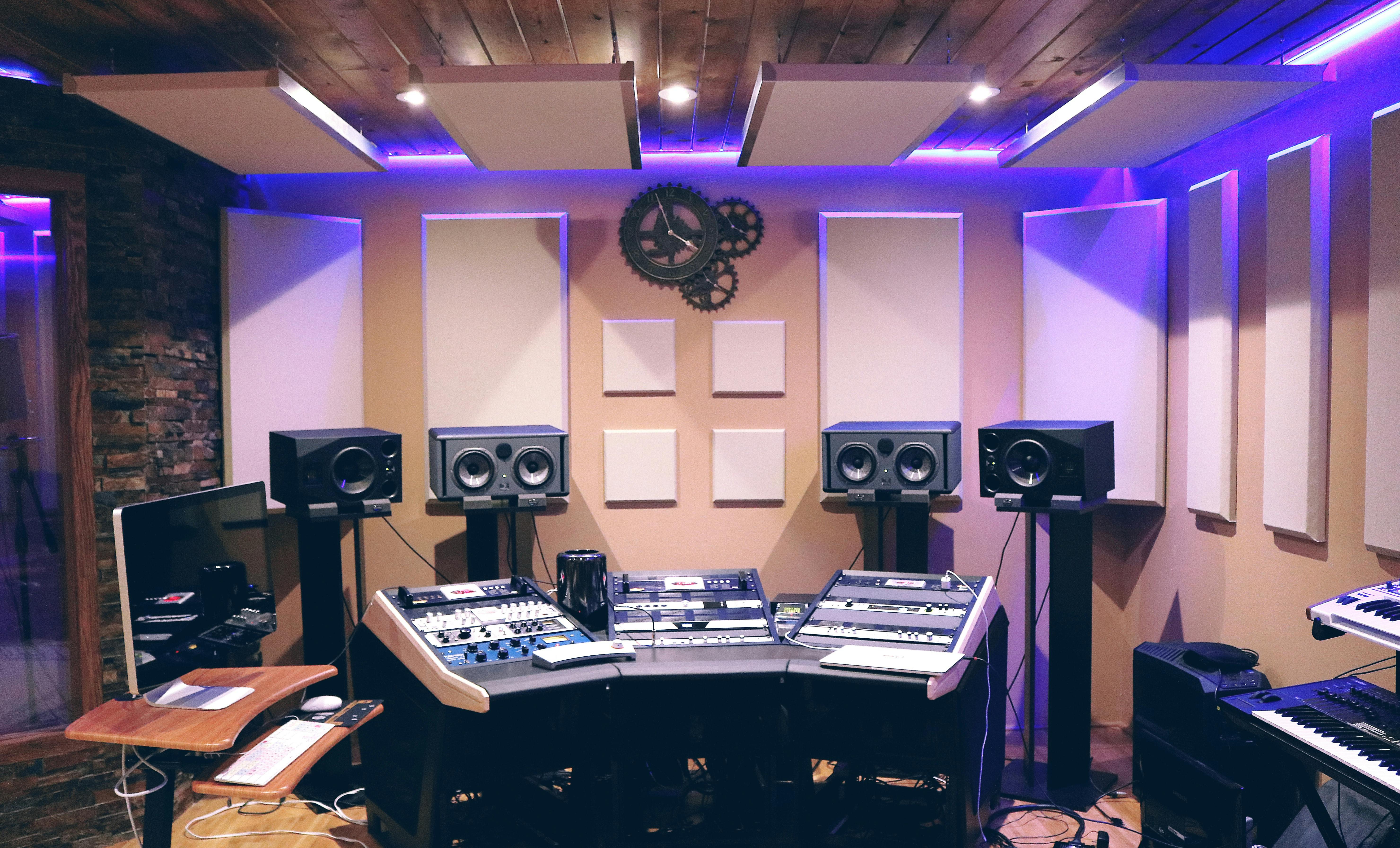
Outer-suburban and regional venues often share a particular set of constraints: low ceilings, limited rigging points, no dedicated loading dock, a bar that must remain open during the show, and a committee that is more concerned with the carpet than the acoustics. These constraints are not failures of ambition. They are the actual conditions of production. A musician learns to mix for a room where the drums will bounce off a glass wall. A visual artist learns to hang work so it survives a Friday night crowd and a Sunday morning cleaning crew. The sensibility that emerges is practical, unpretentious, and alert to the room.
Touring Routes and Exhibition Circuits
Australian touring routes are shaped by distance, population density, and the location of airports. A band from Melbourne can play Geelong, Ballarat, Bendigo, and Castlemaine in a long weekend. A band from Perth can play Fremantle, Bunbury, and Margaret River, then face a six-hour drive to the next viable town. The route is not just a logistical problem. It changes the music. Bands that tour long distances tend to develop tighter sets, more durable gear, and a repertoire that can survive a room with bad monitoring. They also tend to write songs about driving, waiting, and the strange intimacy of small-town audiences.
Visual art has its own version of this. The regional gallery circuit—places like Grafton, Benalla, Broken Hill, and Burnie—operates on a different rhythm to the commercial gallery calendar. An artist might have work in a touring group show that spends two years moving through six venues, each with different wall dimensions, different lighting, and different interpretive signage. The work is not fixed at the moment of completion. It is re-made at each installation. The artist who understands this will make work that can travel: not just physically durable, but conceptually resilient enough to hold its own in a room next to a local historical society display or a school group’s collaborative mural.
The shared sensibility here is an acceptance of contingency. A musician does not expect the same sound in every room. A visual artist does not expect the same light on every wall. Both learn to work with what the route gives them, and both develop a quiet suspicion of work that only functions under perfect conditions.
Funding Instruments and Their Quiet Effects
Australian arts funding is a patchwork of federal, state, and local programs, each with its own application forms, eligibility criteria, and reporting requirements. The funding instrument is not neutral. It shapes the work in ways that are rarely discussed in public.
For musicians, a typical grant might cover recording costs, touring costs, or professional development. The application asks for outcomes, audiences, and alignment with strategic priorities. A band that needs $5,000 to press vinyl and tour the east coast will write a different application than a band that needs $50,000 to develop a new work with a visual component. The smaller grant tends to reward feasibility and clear deliverables. The larger grant tends to reward ambition and cross-disciplinary collaboration. Neither is inherently better, but each produces a different kind of work.
For visual artists, the equivalent instruments are project grants, residencies, and public art commissions. A public art commission, for example, comes with a brief, a budget, and a committee. The artist who works in this space learns to write proposals that anticipate objections, to design work that can survive a risk assessment, and to accept that the final piece will be discussed in terms of community benefit as much as aesthetic merit. This is not a corruption of art. It is a particular kind of art-making, with its own skills and its own satisfactions.
The common sensibility here is a familiarity with bureaucracy. Musicians and visual artists in non-metropolitan Australia often share the same grant-writing workshops, the same regional arts officers, and the same deadlines. They learn to describe their work in the language of outcomes and engagement, even when the work itself is stubbornly resistant to that language. The result is a kind of bilingualism: one language for the funding body, another for the studio or the rehearsal room.
Instruments, Materials, and the Built Environment
The instruments and materials available in a place shape what can be made there. This is obvious in music: a town with one music shop that stocks entry-level guitars and a limited range of strings will produce a different sound than a city with specialist luthiers and a second-hand market full of vintage amplifiers. But the same is true in visual art. A regional artist who cannot easily access high-quality oil paint or large sheets of archival paper will work with what the local hardware store and the school supplier can provide. That might mean house paint on plywood, or pastels on butcher’s paper, or found objects assembled with construction adhesive.
These material constraints are not just limitations. They can become a style. The sound of Australian regional rock is partly the sound of affordable solid-state amplifiers, worn-in drum kits, and guitars that have been retuned to accommodate the humidity. The look of much outer-suburban and regional visual art is partly the look of materials that are available, affordable, and able to survive a long drive in a hot car. The work is not worse for this. It is simply made under specific conditions, and those conditions are legible in the work if you know how to look.
The built environment matters too. A musician who rehearses in a tin shed in summer learns to play with a certain physical economy. A visual artist who works in a garage with a concrete floor and a single fluorescent tube learns to see colour in a particular way. The room is not just a backdrop. It is a collaborator, or at least a persistent interlocutor.
The Shared Sensibility, Stated Plainly
What, then, is the common sensibility? It is not a style, a subject matter, or a political position. It is a way of working that is shaped by distance, scarcity, and the need to make do. It is a preference for work that can survive a bad room, a long drive, a short deadline, and a committee meeting. It is a suspicion of work that demands perfect conditions, and a respect for work that holds up under imperfect ones.
This sensibility is not unique to Australia. It exists wherever artists work at a distance from the centres of cultural power. But it has a particular Australian inflection, shaped by the size of the continent, the thinness of the population outside the capitals, and the specific history of arts funding and regional infrastructure. A musician from Ballarat and a visual artist from Grafton may never meet, but they will recognise each other’s work. They will see the same long drives, the same grant applications, the same rooms with bad lighting and good audiences.

What This Means for the Work
The practical consequence of this shared sensibility is that the work tends to be direct. It does not waste time on effects that will not survive the room. It does not assume an audience that already knows the references. It is made to be encountered, not just admired. This is not a claim that all Australian music and visual art is good, or that all of it is honest. It is a claim that the conditions of production leave a mark, and that the mark is often legible.
For a musician, this might mean writing a chorus that works in a room where half the audience is talking. For a visual artist, it might mean making a painting that holds the wall from across a hall, not just from two feet away. These are not compromises. They are skills, developed over years of working in specific places with specific constraints.
FAQ
Do Australian musicians and visual artists actually collaborate, or is this just a critical metaphor?
Both. There are genuine collaborations—album covers, video clips, live visuals, cross-disciplinary residencies—but the shared sensibility described here is more often a matter of parallel conditions than direct contact. A musician and a visual artist may never work together, yet still produce work shaped by the same venues, funding cycles, and material constraints.
Is this sensibility limited to regional and outer-suburban Australia?
No, but it is most visible there. Capital-city artists also work with constraints, but they have more access to specialist venues, suppliers, and peer networks. The further you get from the capitals, the more the constraints become the dominant fact of the work, and the more the shared sensibility becomes apparent.
Does this mean the work is defined by lack?
Not necessarily. Constraint can produce focus, economy, and a particular kind of clarity. The point is not to romanticise scarcity or to suggest that better funding and infrastructure would not help. The point is to describe what actually happens under current conditions, and to take that seriously as a creative fact rather than a deficit.
How can I see this sensibility in practice?
Go to a regional art prize opening and stay for the live music afterwards. Look at the room, the lighting, the audience, and the work. Then ask yourself what would change if the same work were shown in a capital-city gallery or played in a capital-city venue. The differences are the sensibility.
Where This Leads
This article is the first in a series on the material conditions of Australian creative work. The next piece will look at a single venue type—the regional memorial hall—and trace how its architecture shapes both live music and visual art exhibitions. If you have a hall, a gallery, a studio, or a rehearsal room that you think deserves that kind of attention, send a note through the contact page. The aim is not to build a theory from above, but to describe the rooms from the inside.