The Moment Everything Shifted
There’s a particular feeling you get when you’re watching something genuinely important happen in real time, before the marketing departments realize they need to market it. That’s where we are now with Mexican coffee culture in American bars. It’s not a subtle pivot either. The numbers don’t lie: café de olla, that traditional Mexican coffee brewed with cinnamon and piloncillo in a clay pot, has exploded across craft cocktail menus with a 214% increase in appearances at U.S. bars between 2024 and 2025. This isn’t some minor seasonal trend that’ll be forgotten by fall. This is a fundamental recalibration of what we think coffee cocktails can be.
For years, the espresso martini held court. Slick, efficient, everywhere. Bartenders could make it in their sleep. But there’s something deeply tired about that drink now, isn’t there? It represents a very specific moment in cocktail culture: one that was all about speed and aesthetics, about Instagram-ready presentation over actual flavor complexity. The café de olla represents something entirely different. It’s slower. It’s rooted. It carries centuries of preparation ritual, and when a bartender makes you one, they’re not just mixing a drink. They’re participating in a cultural practice that means something.
Where the Supply Chain Tells the Real Story
You can always tell when a food or beverage trend is legitimate versus manufactured by following the supply lines. When imports of piloncillo, that unrefined cane sugar essential to café de olla, grew 18% in 2024 alone according to USDA trade data, you’re looking at a market responding to genuine demand rather than a marketing campaign. Specialty importers who’d been moving small quantities for years suddenly found themselves struggling to keep the product on shelves. The infrastructure was responding to something real.
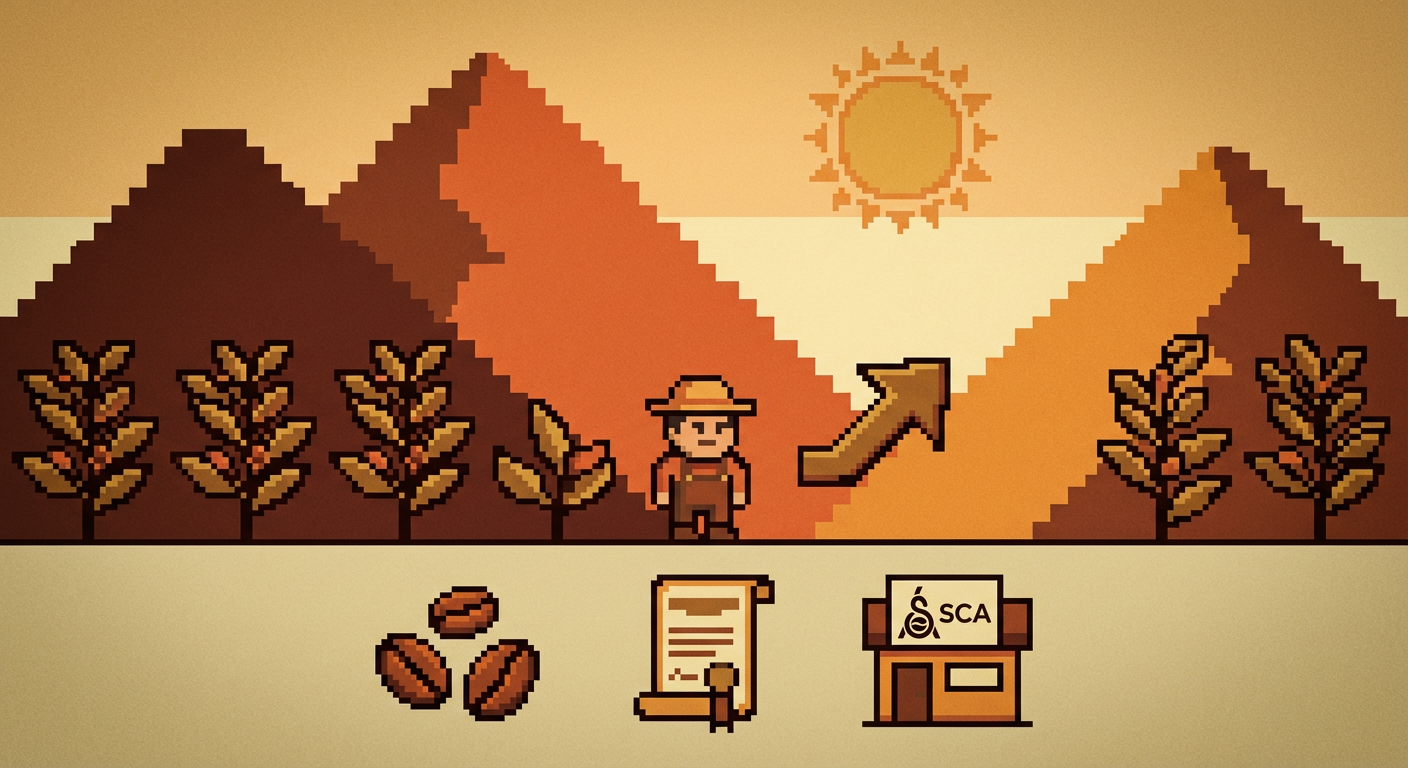
Even more telling is what’s happening in the origin regions themselves. Specialty Coffee Association Origin Trends 2025 shows that between 2022 and 2025, Oaxaca saw a 30% increase in specialty coffee farm certifications. Coffee farmers in Mexico aren’t just growing commodity product anymore. They’re investing in the certification, the traceability, the quality infrastructure that craft bartenders actually care about. When a bar owner in Brooklyn sources coffee for their café de olla cocktails from a specific cooperative in Oaxaca, they’re supporting a transformation happening at the ground level.
This is where my contrarian side has to acknowledge something: capital, for once, is actually following culture instead of trying to manufacture it. That’s rare. That’s worth noting.
The James Beard Moment and What It Means
James Beard Award finalist bar Juana Tamale in Chicago didn’t set out to start a revolution. They simply introduced their Olla Negra cocktail in January 2025, a thoughtful expression of café de olla tradition filtered through modern cocktail technique. Within the first month, they were allocating only 50 units per night and selling out every single one. Fifty. Per night. In a city with hundreds of bars. That’s not casual interest. That’s people actively seeking something they feel they need to experience.
What fascinates me about Juana Tamale’s approach is that they didn’t strip the tradition down or smooth it out for easier consumption. The drink maintains its essential character. The cinnamon is present. The piloncillo sweetness is there. It’s not a diluted version of Mexican coffee culture designed for American palates. If anything, it demands that American palates adjust to it. And people are showing up for exactly that. The bar became a destination not despite its specificity, but because of it.
This matters because it signals something about where cultural authority is shifting in beverage spaces. The tastemakers aren’t just in New York and California anymore, if they ever really were. Chicago’s understanding of Mexican culinary and beverage traditions is being taken seriously, globally. Imbibe Magazine 2025 Cocktail Trends named the Café de Olla Sour a contender for cocktail of the year, and simultaneously you could find variations on menus in New York, Los Angeles, and London. That kind of coordinated global adoption around a genuinely specific cultural drink doesn’t happen by accident.
The Uncomfortable Questions About Appropriation and Authenticity
I need to sit with this for a moment, because it matters. When something rooted in Mexican culture suddenly becomes fashionable in American craft bar culture, there’s a legitimate conversation about who benefits and who gets erased in the process. Are we elevating Mexican bartenders and coffee producers to positions of authority and economic power? Or are we just creating another tier where bartenders in expensive neighborhoods get to curate Mexican cultural aesthetics while the actual communities those practices come from remain economically marginalized?
The honest answer is probably: it’s complicated and it depends. What I’ve observed at bars actually doing this well is genuine collaboration and knowledge-sharing, not appropriation. The bartenders I’ve talked to who are serious about café de olla don’t approach it as a trend to exploit. They’re studying the preparation methods, learning the history, building relationships with coffee farmers and importers who have family ties to these traditions. When that foundation exists, the elevation of the drink becomes elevation of the culture itself. When it doesn’t, it becomes another example of cool aesthetic divorced from substance.
The test, I think, is this: Are Mexican bartenders and coffee producers positioned as equals in these conversations, or as suppliers? Are they invited to the storytelling table, or just providing the raw materials for someone else’s narrative? The best bars getting this right understand that the café de olla revival only works when it brings Mexican coffee culture and Mexican bartenders into positions of genuine authority within Western cocktail spaces. That’s not tokenism. That’s what actual cultural exchange looks like.
What Comes Next, and Why You Should Pay Attention
Trends die when they go mainstream. They transform into something institutionalized and safe, stripped of the specificity that made them interesting. The real question now is whether café de olla will maintain its integrity as it continues spreading, or whether we’ll see it become just another ingredient on the back bar, used carelessly by bartenders who don’t understand what they’re working with. Based on what I’m seeing, I’m cautiously optimistic that it might actually survive the scaling process. The supply chain is invested. The coffee farmers are investing in quality. The serious bartenders are doing the work to understand what they’re making.
What’s happening right now in bars across America is a genuine conversation about how we drink, who gets to shape those conversations, and whether tradition and craft can coexist with contemporary cocktail culture. Mexican coffee culture isn’t taking over craft bars because of a marketing push. It’s taking over because it’s genuinely better, more complex, more rooted than what came before. That’s worth paying attention to. That’s worth supporting. And if you haven’t tried a proper café de olla cocktail yet, made by someone who actually understands what they’re doing, that should probably be your next night out.