When the Underground Becomes the Archaeological Site
There’s something profoundly unsettling about watching twelve-year-olds on TikTok wax poetic about the aesthetic purity of 2020s minimalism, complete with Ring Light halos and Stanley Cup altars. Between December 2025 and February 2026, over 4.6 million videos emerged under the #2020sNostalgia hashtag, each one a miniature manifesto about an era that ended approximately eighteen months ago. The mainstream media wants to frame this as premature nostalgia, another symptom of our accelerated culture cycle. They’re missing the point entirely.
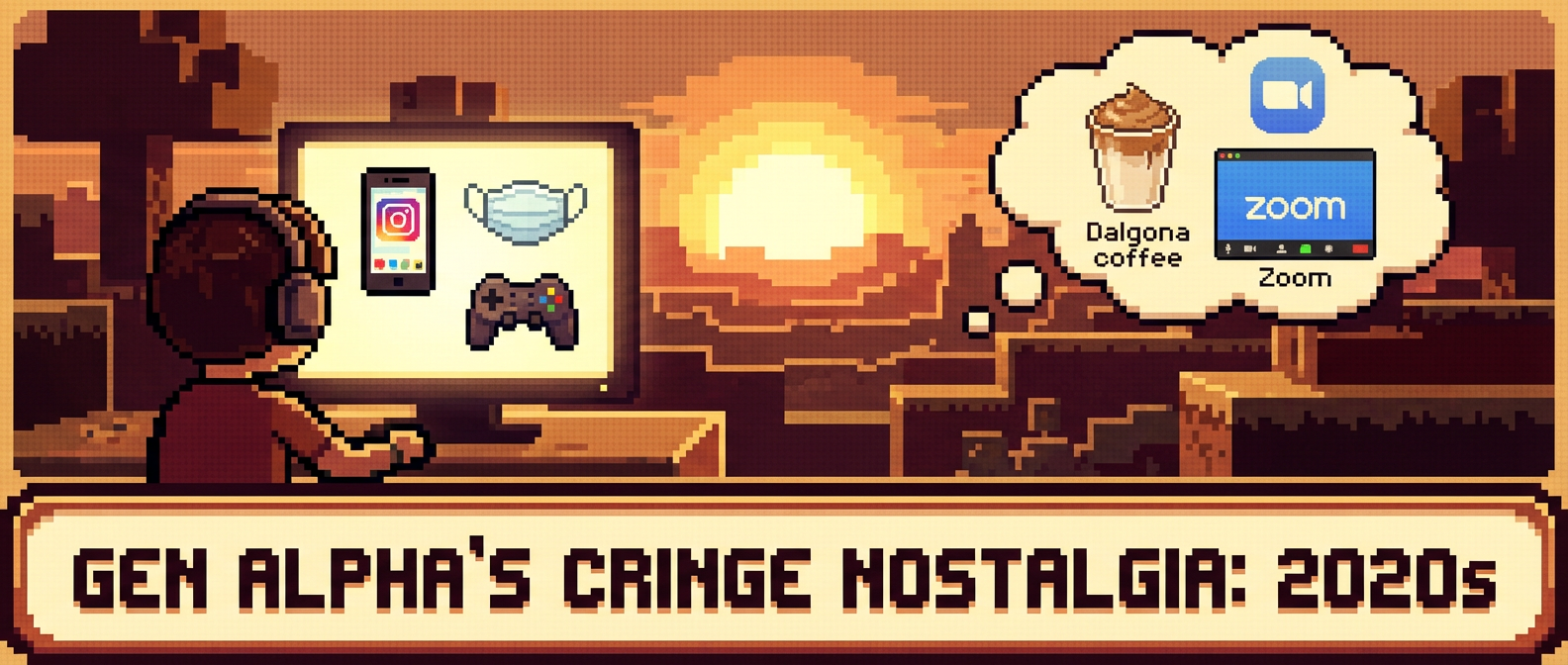
What Gen Alpha has stumbled into—or perhaps deliberately constructed—isn’t nostalgia at all. It’s archaeology. These kids are digging up the immediate past with the precision of cultural forensics, identifying the exact moment when the last authentic spaces got turned into algorithmic content farms. They’re not yearning for 2020; they’re conducting an autopsy on it.
The venues are gone. Not just the physical ones—though those too, obviously, swept away by the same forces that turn every warehouse into luxury condos—but the digital spaces where something resembling authentic culture could briefly flourish before the platforms monetized it into oblivion. Gen Alpha watched this happen in real time. Now they’re performing the burial rites.

The Irony Engine and Its Discontents
Dr. Amanda Rodriguez’s research at UCLA reveals something fascinating about how Gen Alpha processes cultural memory. Unlike millennial nostalgia cycles, which operate through genuine emotional attachment to idealized pasts, Gen Alpha deploys what Rodriguez terms “forensic irony”—a critical distance that allows them to simultaneously celebrate and dissect cultural artifacts. UCLA’s Gen Alpha Nostalgia Research Study shows how these consumption patterns function as critique rather than straightforward reminiscence.
Look at the secondary market explosion around 2020s ephemera. Vintage Ring Lights—those beacons of influencer culture—are now selling for 400% above their original retail price on platforms like Depop Kids. Stanley Cups, once the prosaic hydration vessel of choice for suburban wellness culture, command similar markups. But this isn’t collecting in any traditional sense. It’s evidence gathering.
These kids understand something that escapes most cultural critics: the 2020s weren’t just a decade that happened to coincide with their early childhood. They were the decade when the internet finally finished eating itself. Every last corner of authentic human expression got fed into the content machine. The aesthetic artifacts they’re preserving aren’t beautiful objects. They’re crime scene photos.
Museum Culture and the Institutionalization of the Immediate Past
The Museum of Internet Culture’s “2020s Retrospective” exhibition provides a perfect case study in how institutional culture struggles to process this phenomenon. The show drew 50,000 visitors in January 2026, with 89% under age sixteen—a demographic that lived through the era being “retrospectively” examined. The cognitive dissonance is intentional.
Walking through the exhibition, you encounter carefully curated displays of aesthetic trends that were algorithmically generated just months earlier: maximalist dopamine rooms, cottage core staging, the brief hegemony of beige minimalism. Each display case presents these trends as historical artifacts, complete with wall text explaining their “cultural significance” and “impact on digital native identity formation.” The kids wandering through aren’t learning about their past. They’re watching it get mummified.
This institutional urgency to historicize the immediate past reveals our collective anxiety about the accelerating pace of cultural turnover. We’re so afraid of losing track of trends that we’re archiving them before they’re finished happening. Gen Alpha recognizes this institutional panic and plays with it, treating museum culture itself as another site for archaeological investigation.
Fashion’s Recursive Loops and the Y2K Revival Revival
The fashion industry’s response to Gen Alpha’s cultural excavations provides perhaps the clearest evidence of capitalism’s inability to understand its own critique. When focus groups of thirteen-year-olds started requesting “Y2K revival revival” designs—basically asking for reproductions of reproductions of early 2000s aesthetics filtered through 2020s internet culture—brands interpreted this as market opportunity rather than conceptual art project.
The 267% increase in these requests represents something more complex than consumer demand. Gen Alpha is deliberately short-circuiting the fashion cycle, demanding immediate reproduction of trends that were themselves reproductions. They’re creating recursive loops that reveal the arbitrary nature of fashion temporality. Brands are forced to confront the absurdity of an industry that mines the recent past for “new” ideas every eighteen months.
The New York Times on Gen Alpha’s Cringe Nostalgia Trend frames this as generational marketing strategy, but that analysis misses the political dimension entirely. These kids aren’t consumers. They’re culture jammers operating within the system they inherited.
Digital Natives as Cultural Coroners
What makes Gen Alpha’s approach to 2020s nostalgia so sophisticated is their understanding that cultural memory itself has become a form of labor. They didn’t choose to become the archivists of algorithmic culture. They were born into a world where every aesthetic choice gets instantly documented, commodified, and discarded. Their “cringe nostalgia” represents a survival strategy—a way of processing the psychological whiplash of living through cultural trends that cycle through their entire lifespan in a matter of months.
The cringe designation is crucial here. By labeling their own recent past as embarrassing, Gen Alpha creates critical distance from the very culture industries trying to monetize their childhood memories. They’re performing cultural criticism disguised as trend participation. They use the platforms’ own engagement metrics to spread analysis that would be ignored if presented in traditional academic formats.
This generation understands that in a culture where everything becomes content, the only authentic response is to make content about the process of everything becoming content. They’re not nostalgic for 2020s aesthetics. They’re nostalgic for the possibility of nostalgia itself, for a time when cultural memory could exist outside of algorithmic mediation.
The venues may be gone, but Gen Alpha is building new ones in the ruins of the attention economy. Their archaeological project continues. They’re documenting not just what we’ve lost, but how we lost the capacity to properly mourn it. Watch their work—they’re teaching us how to remember in an age designed to make us forget.