The Moment Everything Changed
September 15, 2025. That’s when I first noticed something shifting in the cultural geology of North Brooklyn. Not the obvious stuff like another artisanal donut shop opening or yet another venue getting priced out by developers. This was subtler. Walking past the courts at McCarren Park, I witnessed something that should have been impossible: a cluster of people I recognized from gallery openings and underground music shows, holding what appeared to be oversized ping pong paddles, engaged in what looked suspiciously like organized sports.
The NYC Parks Recreation Trends Analysis would later confirm what I was seeing in real time. Between 2024 and 2026, pickleball participation among 18-34 year olds in New York City exploded by 223 percent. But raw numbers tell only part of the story. What we were witnessing was not merely the adoption of a sport, but the birth of an entirely new social infrastructure.
By February 2026, the Brooklyn Pickleball Social Club had a waitlist of 2,800 aspiring members, each willing to pay $180 monthly for the privilege of participation. This wasn’t recreational sports anymore. This was exclusivity disguised as accessibility, wrapped in the aesthetics of democratic leisure.
The Architecture of Artificial Scarcity
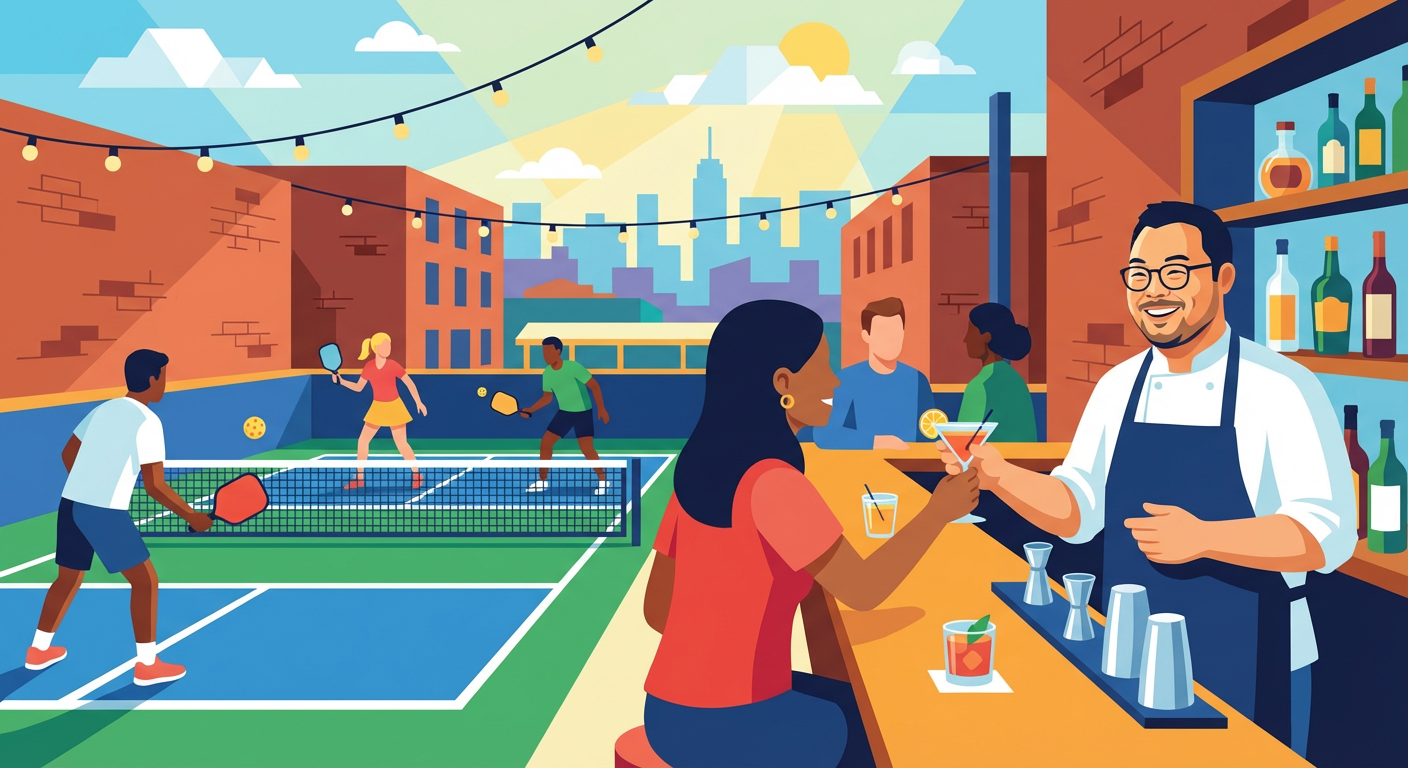
David Chang understood the assignment before anyone else recognized there was one. When he opened Pickle & Pour in Williamsburg this past January, combining pickleball courts with craft cocktails in a converted warehouse space, he wasn’t just capitalizing on a trend. He was manufacturing the cultural infrastructure that would transform a relatively simple paddle sport into Brooklyn’s most coveted social currency.
The genius lay in the packaging. Pickle & Pour doesn’t sell pickleball; it sells belonging. The membership tiers, the curated playlist during peak hours, the Instagram-optimized lighting that makes everyone look like they’re starring in a Nordic wellness commercial. Chang took the playbook from exclusive fitness concepts like SoulCycle and applied it to a sport that was, until recently, primarily associated with retirement communities in Florida.
What emerged was something entirely new: competitive leisure as lifestyle branding. TikTok videos tagged with #BrooklynPickleball have generated over 45 million views since September 2025, but scroll through the content and you’ll notice something peculiar. Very little of it actually focuses on the technical aspects of the game. Instead, it’s all aesthetic signaling: the right paddle, the right shoes, the right attitude of casual athletic competence.
The Dating Industrial Complex Adapts
Nothing confirms a cultural shift quite like its absorption into the dating economy. Bumble reported a 340 percent increase in profiles mentioning pickleball within Brooklyn zip codes during the final quarter of 2025. This wasn’t merely people adding a hobby to their list of interests. This was strategic positioning within a rapidly evolving social marketplace.
Pickleball offers something that traditional Brooklyn dating activities simply cannot: immediate social proof combined with accessible exclusivity. Unlike climbing gyms, which require actual physical skill, or art gallery events, which demand cultural literacy, pickleball provides a low barrier to entry with high signaling value. You can learn the basics in an afternoon, but membership in the right club indicates disposable income, social awareness, and the kind of cultural agility that marks you as someone worth knowing.
The sport’s inherently social nature also solved a problem that had been plaguing Brooklyn’s dating scene for years: how to engineer organic interaction in an increasingly digital social environment. Pickleball doubles naturally create conversation opportunities, shared experiences, and the kind of casual physical proximity that dating apps promise but rarely deliver.
The Economics of Cultural Adoption
Follow the money and the pattern becomes clear. The USA Pickleball Association Growth Report 2026 reveals that equipment sales in Brooklyn alone increased by 445 percent over the past eighteen months. But these aren’t people buying basic paddles from sporting goods stores. The market has rapidly segmented into luxury tiers, with premium paddles retailing for $300 or more, and court shoes designed specifically for pickleball commanding prices comparable to high-end sneaker drops.
What we’re witnessing is the rapid financialization of social belonging. Private courts rent for $40 per hour during peak times. League entry fees range from $150 to $400 per season. Equipment, clothing, and accessories have created an entirely new category of aspirational consumption. The total cost of participation easily exceeds $2,000 annually for serious players, effectively pricing out anyone not operating with significant disposable income.
This economic barrier isn’t accidental; it’s foundational to the sport’s appeal within Brooklyn’s cultural ecosystem. Pickleball has succeeded precisely because it appears democratic while functioning as an exclusivity engine. The courts look public, the rules seem simple, but meaningful participation requires financial resources that function as invisible gatekeeping.
What Dies When Everything Lives
The pickleball explosion represents something larger than sports or social trends. It’s a case study in how cultural capital gets manufactured, distributed, and eventually exhausted within accelerated consumer cycles. What we’re watching is the real-time transformation of organic community activity into branded lifestyle content, complete with membership tiers, influencer partnerships, and venture capital investment.
The irony, of course, is that pickleball’s original appeal lay in its simplicity and accessibility. But cultural adoption within Brooklyn’s social economy requires transformation into something more complex, more exclusive, more photographable. The sport succeeded by becoming everything it wasn’t originally meant to be.
By next summer, I predict we’ll start seeing the first signs of cultural fatigue. The most discerning early adopters will begin migrating toward whatever comes next, leaving behind a fully developed pickleball infrastructure that will continue serving its purpose: providing expensive recreational activities for people wealthy enough to afford recreational activities that cost this much. The cycle will reset, the cultural attention will shift, and we’ll all pretend we don’t remember when everyone was obsessed with hitting plastic balls with oversized paddles.
But perhaps that’s too cynical. Maybe some trends deserve to stick around, even after they stop being trends. What do you think happens when the cultural spotlight moves on?